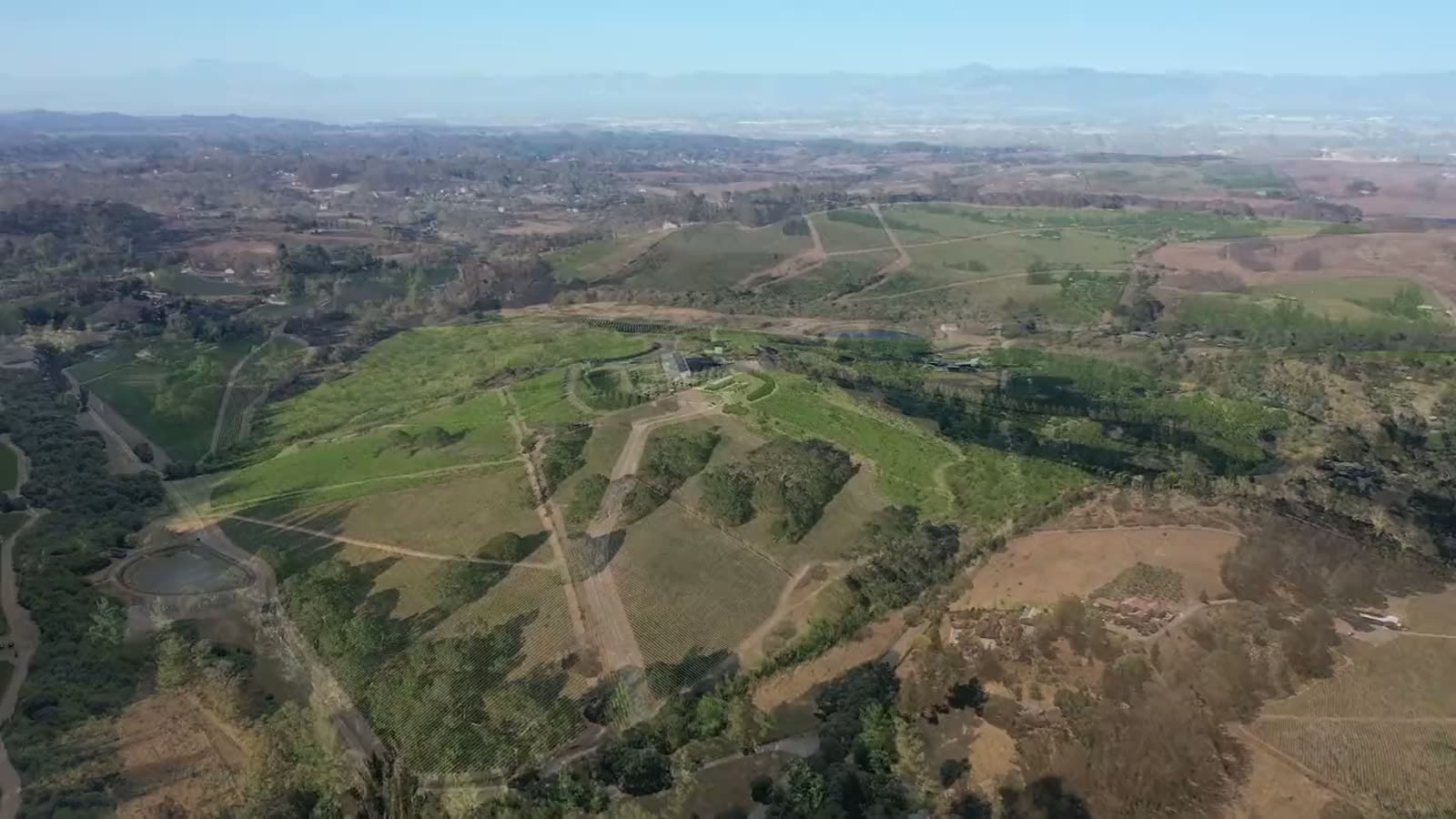
The vineyard
Thirty-Two acres of winegrapes on a sandstone ridge that used to be a seabed.
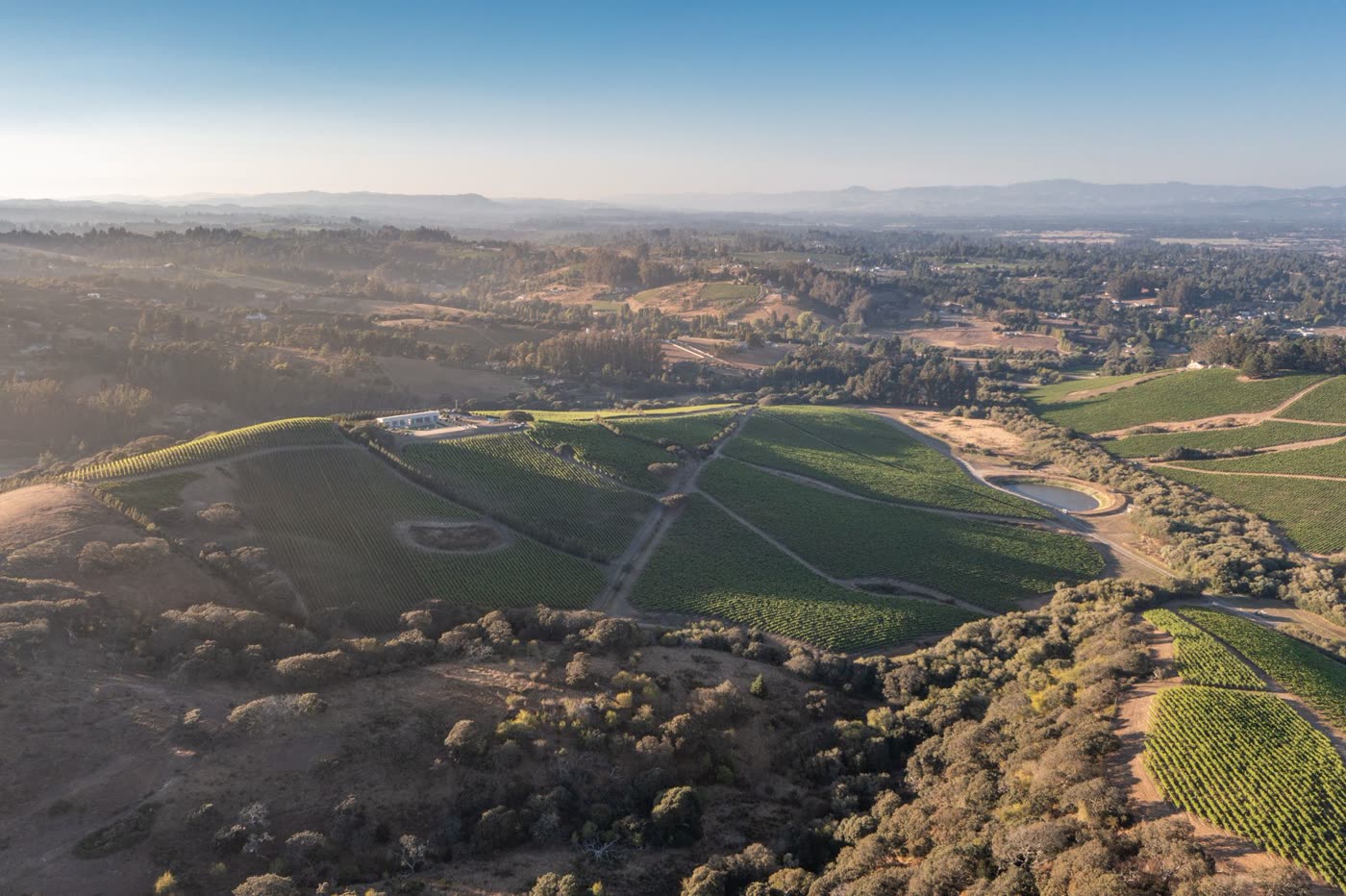
Vineyard located southwest of Sebastopol, in the coldest corner of the Russian River Valley, with close to three hundred feet of fall from the top block to the bottom.
Terroir
Vineyard Site
Located in the windswept hills at the southwestern edge of the Russian River Valley, the fruit from the 5 Wells vineyard is an authentic reflection of the environment in which it grew. The confluence of the water, soil and wind in this region is the terroir, and it is what goes into every bottle.
- 72
- Acres
- 32
- Planted
- 300 ft
- Of fall
- Goldridge
- Sandy loam
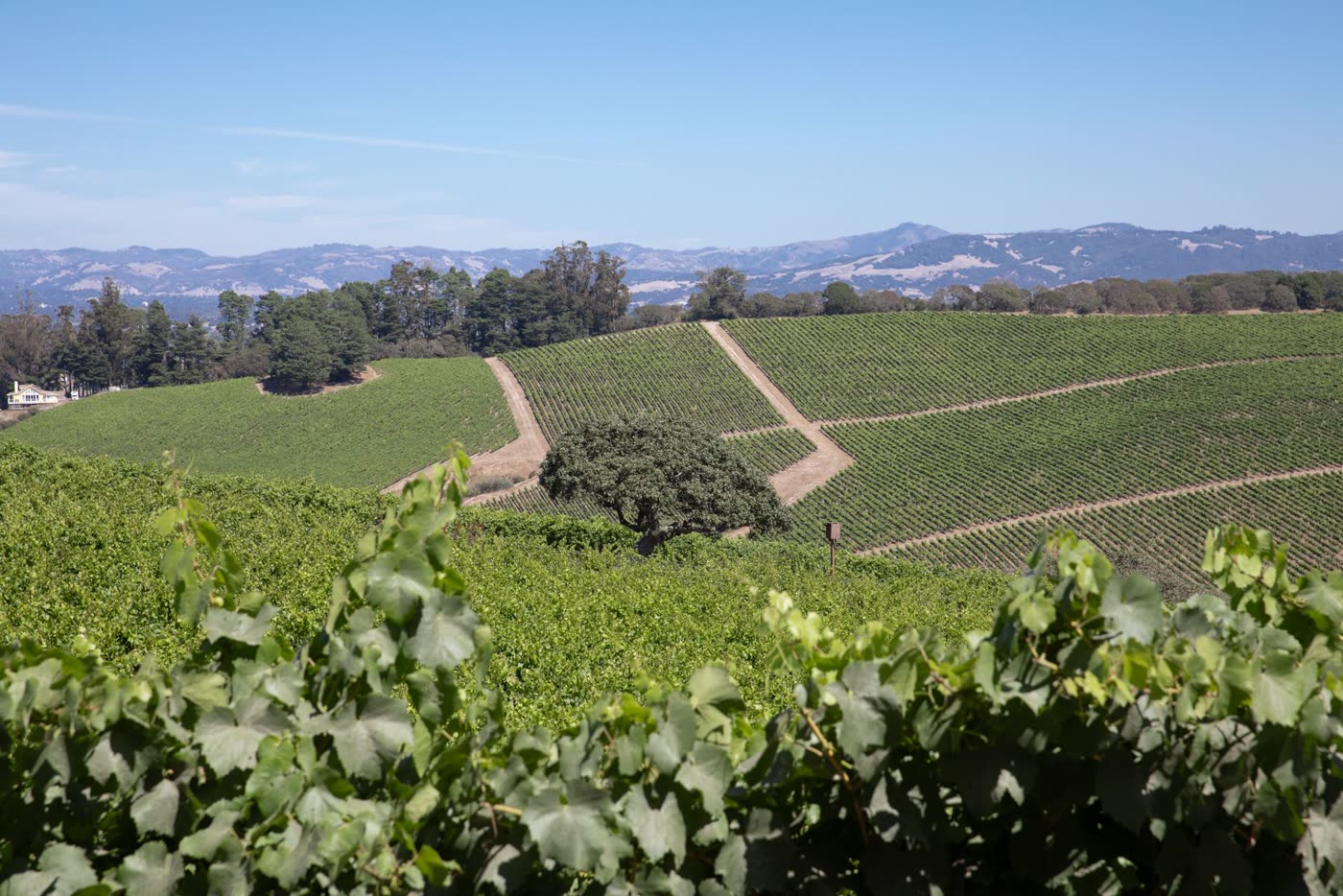
Climate
The coldest corner of the Russian River Valley.
The Sebastopol Hills sit in the southwest corner of the Russian River Valley, closer to the coast than other areas of the Russian River Valley and colder than all of them. That is the whole appeal — cool climate pinot noir!
By early afternoon (when it is the hottest), a reliable breeze generated from the Pacific Ocean and through the rugged terrain picks up and it does not really stop. Fog comes over the ridge most afternoons and sits until about ten the following morning. Both slow everything down. Our season runs long maximizing the hang time allowing the sugars to climb slowly while maintaining the bright acidity.
The wind does one more thing — it thickens the skins. And, thicker skins mean more color, more flavors and more depth. It is why a wine from this corner tastes deeper, more savory and darker than wines from vineyards ten miles inland.
Farming
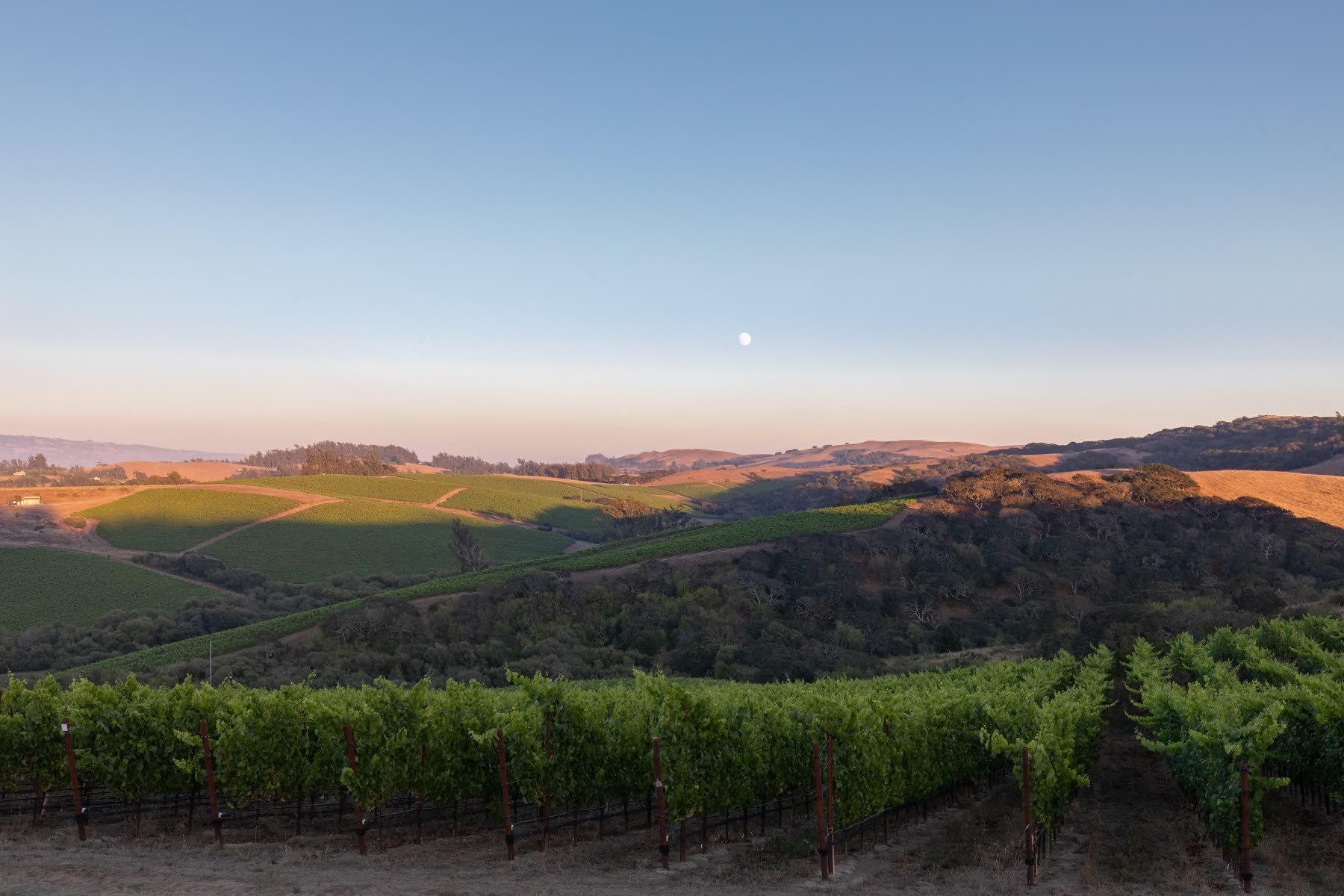
Slow is the only speed up here.
Cool mornings and a steady wind mean long, unhurried ripening resulting in thicker skins, slower sugar development, and balanced acidity that is still there at harvest. This long growing season is a difficult way to farm, but it is the reason the wine expresses deep savory notes and dark fruit.
Soil
Goldridge is what is underneath.
The soil here is Goldridge fine sandy loam, which drains so fast that a vine has to send roots down a long way to find water. A vine that works that hard is a vine that produces concentrated fruit.
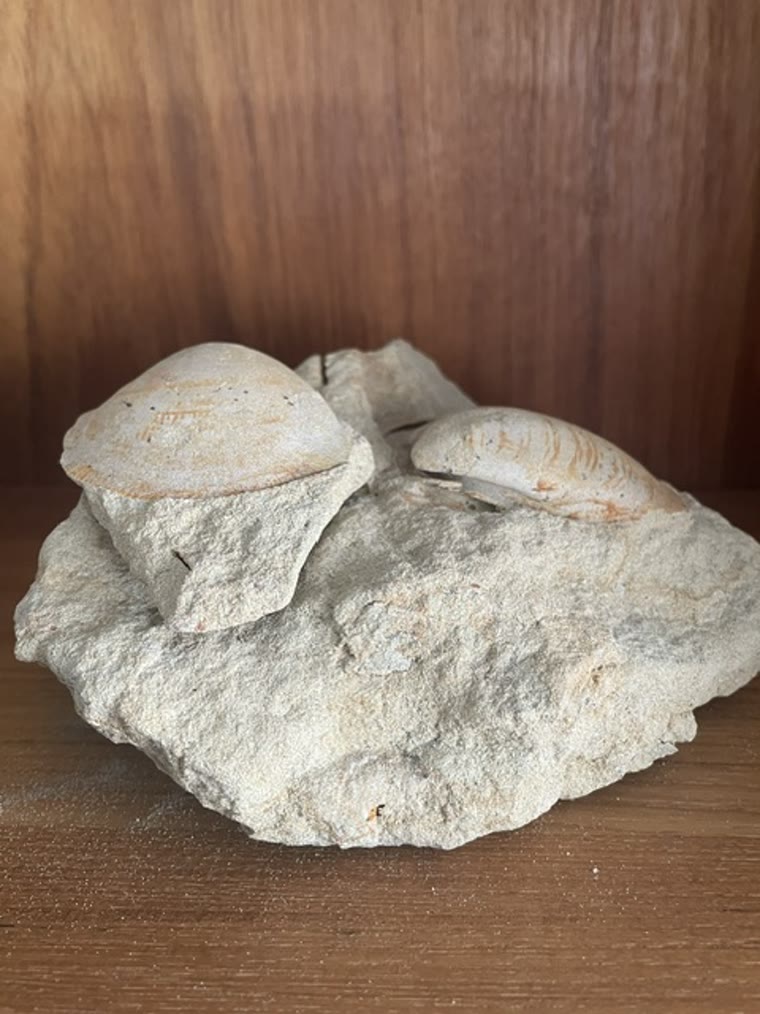
This soil comes from an ancient pedigree: the Wilson Grove Formation. In the late Miocene the Pacific reached far inland of where it sits today, and this hill stood on the shoreline. What settled in that shallow sea hardened into a fine marine sandstone packed with bivalves and shells, and what weathered off the top of it became Goldridge. The soil and the fossil are the same material at two different ages.
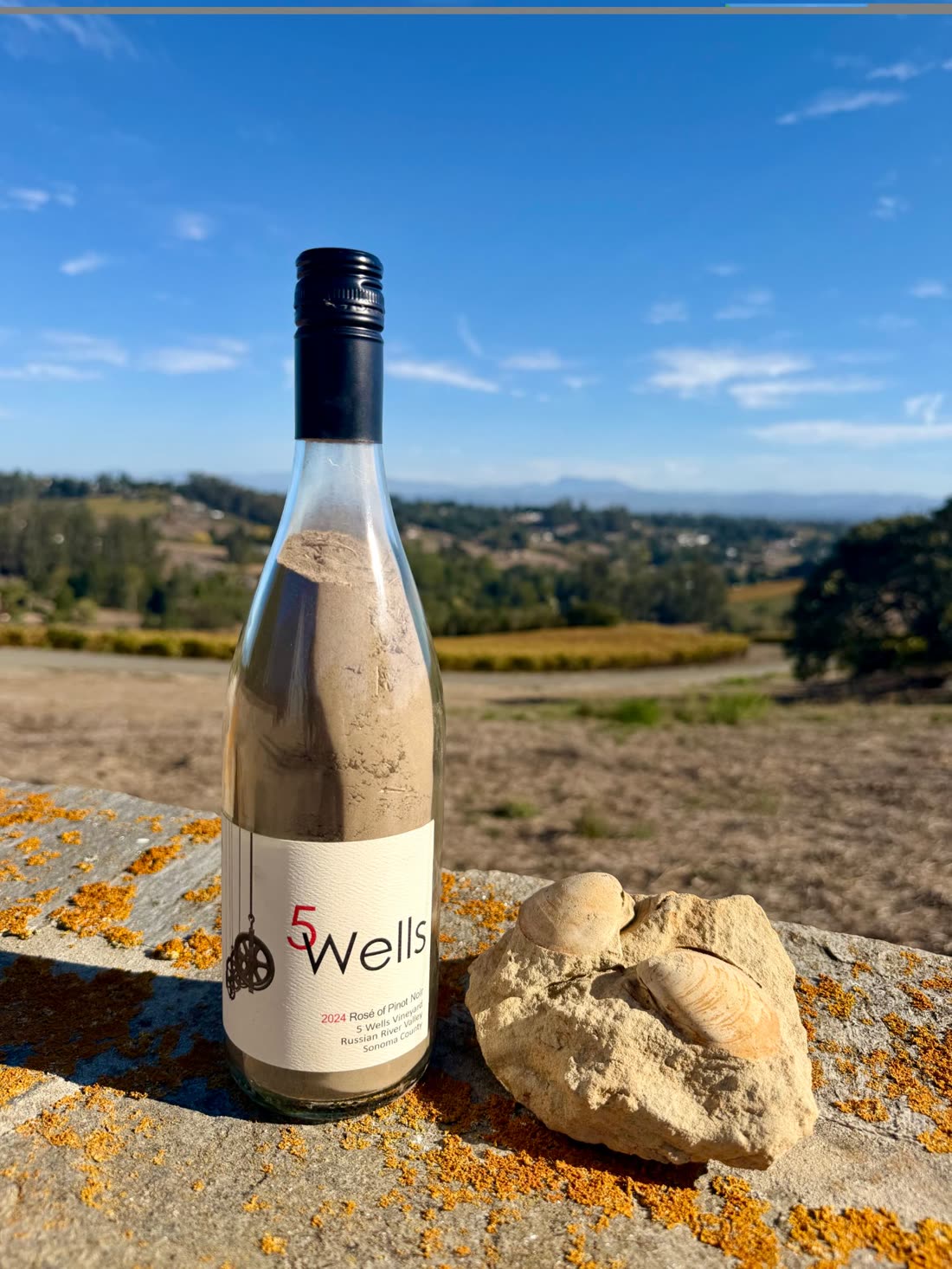
None of this is a story we invented. When the first blocks went in the plow kept turning up shells — the rock with fossilized shells sitting beside the bottle in the photo is one of many that came off this hill.
The blocks
Fourteen blocks, and what is in each one.
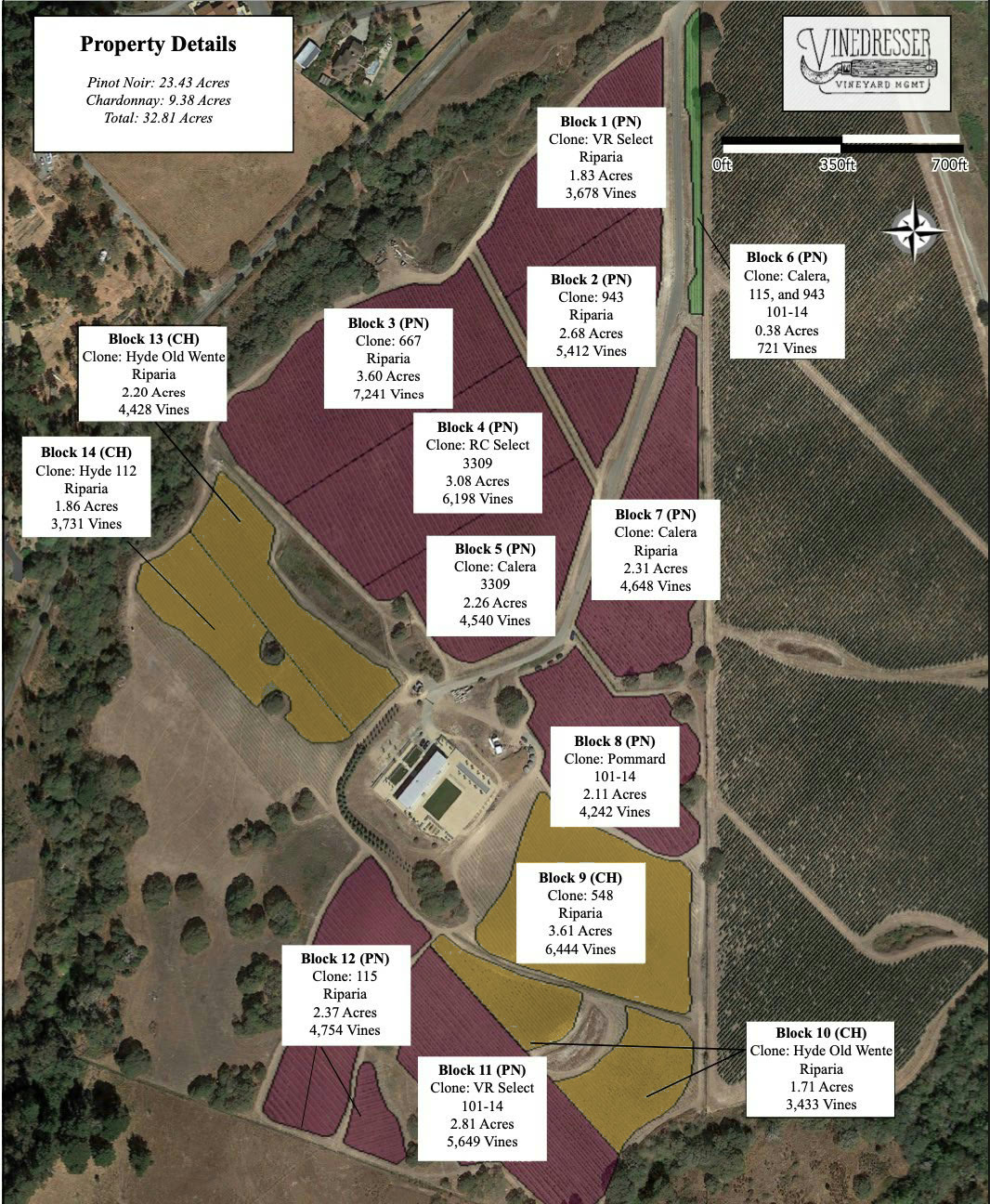
The planted ground is cut into fourteen blocks by aspect, slope and soil, each with its own clone, rootstock and microclimate. That is why we farm by row and often make multiple picks in each block instead of clearing the hill in one pass.
On paper
The site by the numbers
- Appellation
- Russian River Valley, Sonoma County
- Neighborhood
- Sebastopol Hills
- Property
- 72 acres
- Planted
- 32.81 acres: 23.43 pinot noir, 9.38 chardonnay
- Fall, top to bottom
- Close to 300 feet
- Soil
- Goldridge fine sandy loam over ancient marine sediment
- Pinot noir clones
- 667, Calera, Pommard, 115, 943, and two proprietary suitcase clones from the most famous pinot noir vineyard in France
- Chardonnay clones
- Hyde Old Wente, Hyde 112, 548
- Rootstocks
- Riparia, 101-14, 3309
- First blocks planted
- 2015
- Farmed by
- Chris Walden and the Vinedresser team
The list
Hear when the wine is ready.
We send a few emails a year, and only when there is something in bottle.
Join the list